A Search Snippet Is a Clue, Not the Page Itself
A search snippet can make a page sound conclusive. Learn how to inspect its wording, open the source, and recover the context the preview leaves out.
The common mistake with a search snippet is treating its compact sentence as the page’s full claim. A search snippet is selected text, not a complete account, and that shortcut can leave a reader repeating a qualification-free version of what the source actually says.
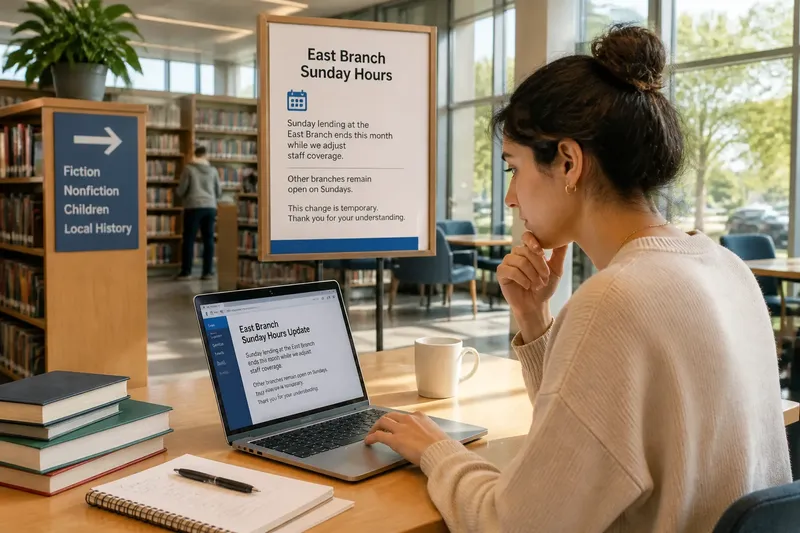
Imagine Maya searches for whether a city library has stopped lending books on Sundays. One result displays: “Sunday lending ends this month.” The wording seems decisive. Before she shares it with a neighborhood group, she opens the result. The page is a notice about one branch’s temporary Sunday schedule, and the sentence in the snippet is followed by a paragraph explaining that other branches remain open. The notice also says the change applies only while that branch’s staff coverage is being rearranged.
Maya’s initial reading was understandable: the preview presented a short, complete-sounding sentence. But the result did not establish that the entire library system had ended Sunday lending. Following her search from preview to page changes what she can responsibly say.
Why did the snippet sound broader than the claim?
A search result usually pairs a page title and address with a short excerpt. The excerpt may be drawn from text on the page that seems relevant to a query. It is not necessarily an abstract written to preserve the author’s whole argument, and its wording may not include the sentence immediately before or after it.
In Maya’s search, “Sunday lending ends this month” could attract attention because it contains the terms she entered. The preview did not say “at the East Branch,” even though that location was central to the notice. Nor did it carry over the condition about staffing. A short excerpt can be accurate as a fragment while giving an incomplete impression of scope.
That does not mean snippets are deliberately misleading. Their limits are ordinary consequences of compression and selection. A page may also be updated, or a search system may display text from a section other than the one a reader expects. The result is a useful pointer, but it cannot by itself settle what the whole page means.
Read the snippet as a reason to inspect the source, not as a substitute for it.
What did opening the source clarify?
Once Maya opened the library notice, she looked for the subject and scope of the claim. The headline named the East Branch. The opening paragraph described its Sunday hours, and the next section distinguished that branch from the rest of the system. The notice therefore supported a narrower statement: Sunday lending at one branch was changing temporarily.
She also checked the date and the page’s surrounding headings. Those details helped her tell whether the result referred to a current notice and whether the excerpt belonged to a section about the branch schedule rather than a general policy. The page did not make every uncertainty disappear, but it answered the question the snippet had left open: who was affected?
For a claim that matters beyond casual conversation, inspect the source’s own wording before repeating it. Look at the heading, the sentence around the quoted phrase, and any nearby qualification about place, time, or conditions.
How should you read a search snippet?
Can the snippet be trusted as a quotation?
It can reproduce words from a page, but it may omit nearby context or combine a passage with a query-relevant phrase. Open the result and locate the wording on the page before quoting it as the source’s complete statement.
Why does the excerpt differ from the page title?
The title identifies or summarizes the page, while the excerpt may show text selected from elsewhere on it. Treat both as clues about what to inspect, not as interchangeable descriptions of the page’s full contents.
What if the page has changed or will not open?
A search result may show text that no longer appears in the current version, while a loading error can prevent you from checking the source. In that situation, avoid presenting the snippet as verified current context; look for a working page from the same publisher or describe the claim as unconfirmed.
Does a more specific query make the snippet complete?
A narrower query can help surface a more relevant passage, but it does not ensure that the excerpt includes the qualifications around that passage. Use search terms to find the relevant page, then read the section in place.
What should you check before repeating the claim?
Maya does not need to read every page from beginning to end to resolve her immediate question. She does need enough context to avoid enlarging a local notice into a system-wide policy. A compact check can keep that distinction visible:
- Who is the subject? Identify the person, organization, place, or group named in the page itself.
- What is the scope? Check whether the claim concerns one branch, one service, or the whole institution.
- What limits the statement? Read surrounding sentences for conditions, exceptions, and qualifications.
- When does it apply? Look for an effective date, an end condition, or signs that the notice may have been updated.
- What kind of page is it? Distinguish a direct notice from a search result, a directory entry, or a page that merely refers to another source.
In Maya’s imagined situation, those checks lead to a careful message: the East Branch is changing its Sunday lending schedule temporarily; the notice does not say that all library branches are closing on Sundays. That wording is less dramatic than the original snippet, but it fits the page she actually read.
When is the preview enough to move on?
Not every search needs a close reading. If a snippet points to a page about a topic you are casually exploring, it may be enough to decide whether the result is worth opening. The distinction matters when the wording could affect a decision, carry a reputational cost, or be repeated as a definite claim.
In those cases, ask whether the snippet supplies the context needed for the claim you plan to make. If it leaves the actor, location, timing, or condition unclear, do not fill those gaps from expectation. Open the source or keep your wording limited to what the preview actually supports.
A search snippet is best used as a signpost: it can point toward relevant text and help you choose what to read next. Maya’s library search shows the practical difference between seeing a sentence and understanding its reach. When the claim matters, open the source and let the page—not its preview—set the boundaries of what you repeat.